
For decades, the “gold standard” in root canal treatment has been about achieving a tight, hermetic seal. While epoxy-resin sealers have long been favored for their sealing integrity and radiopacity, they often come with a biological trade-off: potential cytotoxicity and a lack of immunomodulatory properties.
When root canal treatment is performed, the sealer used to fill the canal doesn’t just sit inertly inside the tooth it interacts with living periodontal tissues at the root tip and with the evolution of materials, clinicians are increasingly shifting toward bioactive solutions that do more than seal they interact, heal, and regenerate.
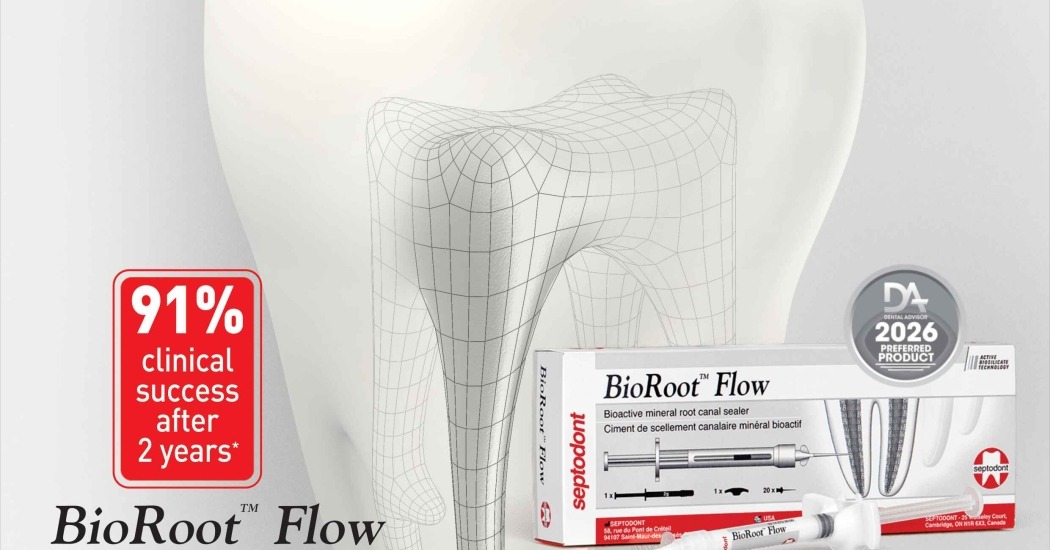
Recent research evaluating BioRoot Flow on human periodontal ligament stem cells (hPDLSCs) indicates that BioRoot Flow can potentially enhance cell differentiation by promoting the expression of essential genes related to bone and cement formation.
While traditional resin sealers have served the industry well, the shift toward bioceramic sealers represents a move from passive filling to active healing.
By promoting cell differentiation, reducing inflammation, and facilitating superior mineralization, BioRoot Flow represents a scientifically substantiated choice for clinicians seeking a bioceramic sealer that supports biological healing alongside mechanical canal obturation.
Source: López-García S, Sanz JL, Murcia L, García-Bernal D, Lozano A, Forner L, Rodríguez-Lozano FJ, Oñate-Sánchez RE. Assessment of the anti-inflammatory and biological properties of Bioroot Flow: A novel bioceramic sealer. Tissue and Cell. 2024;88:102391. https://doi.org/10.1016/j.tice.2024.102391
Sign up now and get an exclusive access to: