
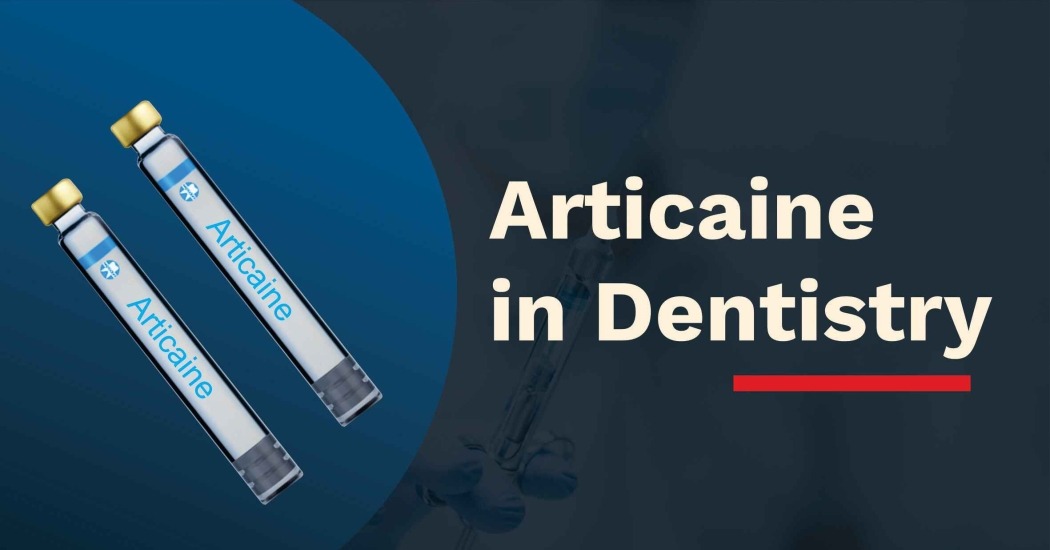
When it comes to making dental procedures comfortable, few innovations have had the same impact as articaine.
Originally introduced for clinical use in Europe in 1976 and in UK in 1998, articaine has become a leading local anaesthetic in almost every country into which it has been introduced.
Articaine stands out as the only local anesthetic specifically designed for dentistry. Its molecular structure is unique combining features of both amide and ester compounds. This allows it to be broken down not just in the liver (like most amides), but also in the bloodstream by plasma esterases, leading to faster metabolism and reduced toxicity (3).
| Features | Advantages | Benefits | |
| Thiophen Ring | Increased liposolubility | Increased potency, Increased diffusion | Less volume required = SAFETY |
| Amide | pKa closer from physiological pH | Quick Onset | Less waiting time |
| Ester | Increased degradation in plasma by esterases | Short plasmatic half-time | Increased tolerability= SAFETY |
| 3D Structure | Increased protein binding | 95% binded to protein | Longer duration of anaesthetic effect |
Septodont offers articaine-based local anesthetic formulations under the brand name Septanest. Septanest contains articaine hydrochloride with epinephrine and is widely used in dental practice for its rapid onset, reliable anesthesia, and favorable safety profile.
(1) Source: GFK data 2009
(2) Source: SDM data 2009
(3) Source: Updates in articaine use in dentistry DOI:10.55302/MSP21442-3065l
(4) ResearchOnline@JCU: Articaine in dentistry: safety, efficacy, practitioner perception and evidence-based practice
Sign up now and get an exclusive access to: