
Local anesthesia is a common clinical procedure performed by dental practitioners in daily practice (1). An average dentist will administer over 1,500 cartridges of dental local anaesthetic a year (2).
Lidocaine, also known as lignocaine, is a class Ib antidysrhythmic and local amino amide-based most popular local anesthetic was synthesized in 1943 by Nils Löfgren, a Swedish chemist that has been on the market since 1948 and is often combined with epinephrine (which extends lidocaine’s duration of action by opposing the local vasodilatory effects of lidocaine). Due to its superior safety as compared to other LA agents, it was quickly adopted (3).
The standard cartridge contains 1.8 ml of 2% lidocaine, equivalent to approximately 36 mg of lidocaine hydrochloride per cartridge (4).
The major advantage of cartridges includes relative ease for the operator during the delivery of the drug and reduced pain perception during anaesthetic delivery (5).
Cartridge-based delivery provides:
| pH | 3 to 5.5 (manufacturing day) |
| Onset | 2-3 min |
| Plasmatic Half-Life | 90 min |
| Duration (1/80,000) | Pulpal: 60 min |
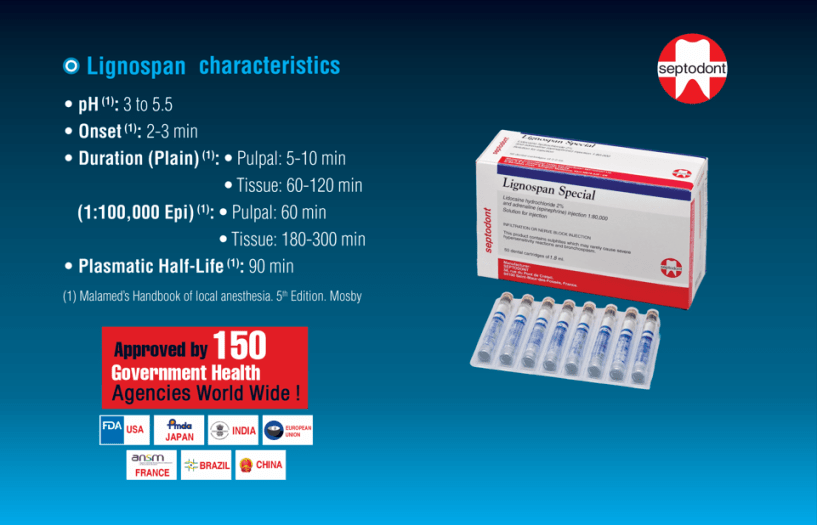
Lidocaine has:
Septodont manufactures lidocaine under the trusted brand name Lignospan® Special, a 2% lidocaine with 1:80000 epinephrine formulation designed specifically for dental use. With decades of expertise in dental anesthesia, Septodont ensures every cartridge delivers consistent quality, reliable performance, and predictable anesthesia.
Lignospan Special reflects Septodont’s commitment to providing dentists with safe, proven, and globally trusted local anesthetic solutions.
Sign up now and get an exclusive access to: